Your Glass Is Talking: What Your Storefront Windows Say Before You Do
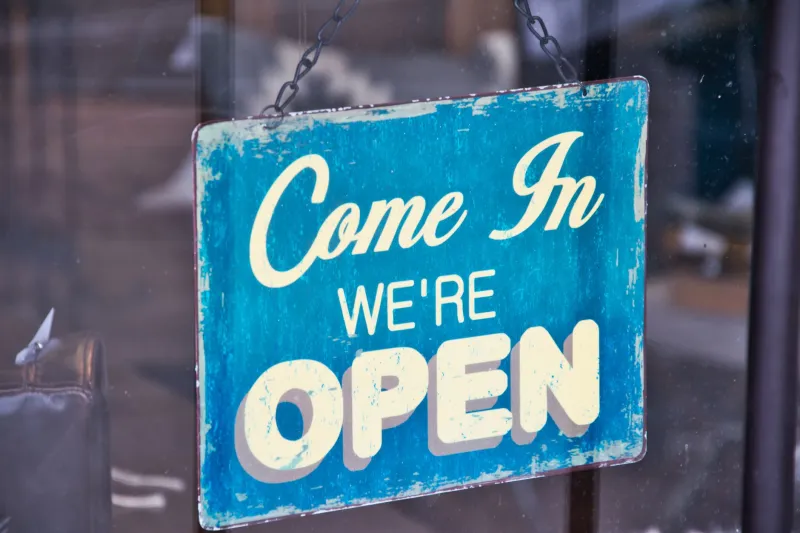
Walk down any Main Street in America and you'll spot it immediately: the storefront that's trying to say everything and ends up saying nothing. Handwritten signs taped at eye level. A faded hours decal peeling at the corner. Three overlapping sale posters fighting for attention next to a credit card logo and a 'We're Open' flag.
Now find the shop that gets it right. One clean logo. One clear message. Maybe a well-designed hours graphic. You knew who they were and what they did before you reached the door.
That difference isn't luck. It's editorial discipline applied to glass — and it's one of the cheapest branding upgrades a local business can make.
The Window Is a Headline, Not a Paragraph
Think about how people actually encounter your storefront. They're walking past at three miles per hour or driving by at thirty. You have a couple of seconds and one glance. That's it.
A good window decal works like a newspaper headline: it makes one promise, clearly. A bakery might run a single die-cut croissant graphic and the word 'Fresh Daily.' A barbershop might feature nothing but a bold logo and 'Walk-Ins Welcome.' The message is singular because the moment is singular.
The mistake most retailers make is treating the window like shelf space — filling every square foot because it's there. But clutter on glass reads as clutter in the business. Customers subconsciously assume the inside of your shop matches the outside.
The Before-and-After Glass Audit
If your windows have accumulated a decade of stickers, signage, and sun-faded promotions, start with a clean slate. Physically strip everything down. Then rebuild using this simple three-tier framework:
Tier 1 — Identity (permanent). Your logo, business name, and hours of operation. These get the best real estate: eye level, near the entrance, on quality vinyl that won't yellow in the sun. This is the stuff that should last five years, not five weeks.
Tier 2 — Invitation (semi-permanent). One line that tells a passerby why to come in: 'Now Serving Breakfast,' 'Full-Service Florist,' 'Free Parking in Back.' Change these seasonally, not weekly.
Tier 3 — Promotion (temporary). Sales and events live on interior window space or a single dedicated decal you can swap out — not taped paper. If you're using painter's tape in 2025, we need to talk.
Anything that doesn't fit one of those tiers? It doesn't belong on the glass. That includes your entire service list, your phone number in four places, and the laminated sign from 2019.
Details That Separate Pro from DIY
Once you know what's going on the glass, execution matters:
- Contrast beats cleverness. White vinyl on dark glass or dark vinyl on bright interiors reads from across the street. Subtle colors read from nowhere.
- Perforated film is your friend. One-way vision film lets you cover large glass areas with graphics while still seeing out from inside. It turns a whole window into a billboard without turning your shop into a cave.
- Mind the sightlines. Don't block eye-level sightlines between staff and customers at the register, or cover security-critical areas. Design around how the door actually opens.
- Measure twice, print once. Bring us your window dimensions and we'll build the artwork to fit — no awkward half-inch gaps or logos cropped by the door frame.
The Door Counts Too
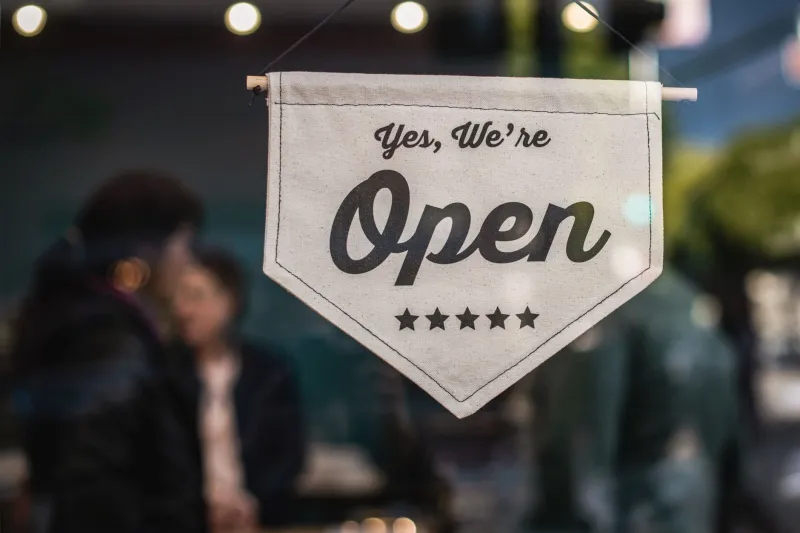
Hours-of-operation signage is the most-read graphic on your entire storefront, and it's usually the worst one. Upgrade it: a clean vinyl hours decal with your logo, consistent typography, and current information. If your hours changed since the decal was printed, fix it today. Nothing erodes trust faster than a customer showing up to a locked door because the glass lied to them.
Your windows are leased advertising space you already own. Give them the same attention you'd give a billboard on the highway — because for the people walking past, that's exactly what they are.