Every November, America Runs the Biggest Sign Test in the World — Your Landscaping Business Should Take Notes
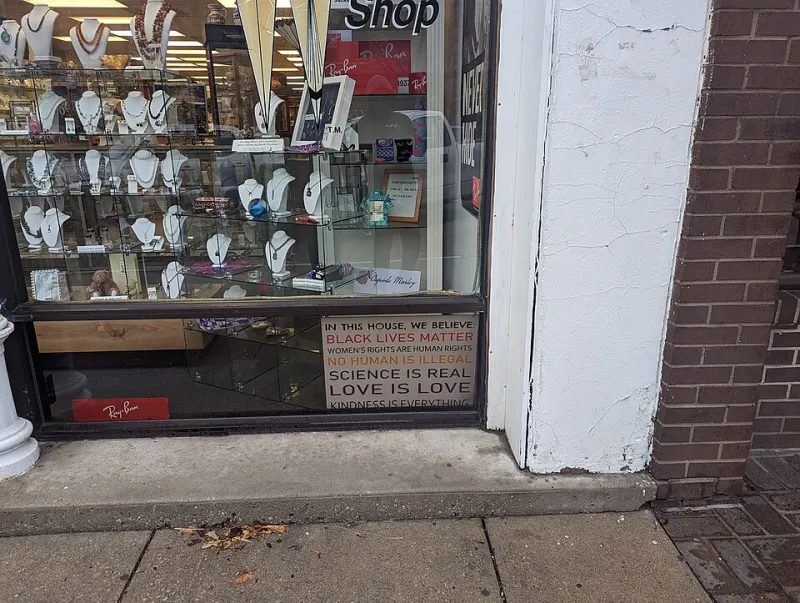
Photo: Elli, CC0, via Wikimedia Commons
Every four years, something remarkable happens on American lawns. Starting in late September, corrugated plastic signs bloom along driveways like a strange seasonal crop. By the time Election Day arrives, tens of millions of them are standing guard on corners, medians, and front yards from Ohio to Arizona.
Political scientists have studied this flood of print for decades, and their findings are surprisingly useful — not for candidates, but for anyone running a service business in a neighborhood-based economy. If you mow lawns, fix roofs, or wire panels, the humble yard sign is doing exactly the same job for you that it does for a school board candidate: building name recognition through sheer, stubborn repetition.
The Science of Seeing It Twice
The research on political yard signs comes with a caveat that most people miss: a sign rarely changes anyone's mind. What it does do is build familiarity. Studies on campaign visibility suggest that repeated exposure to a name — even passive, half-second exposure from a passing car — measurably increases recognition and, over time, a vague sense of trustworthiness.
Psychologists call this the mere-exposure effect. People like what they've seen before. They trust what feels familiar. And when a homeowner finally needs a gutter cleaned or a fence repaired, the name they've driven past forty times has a head start over the name they've never heard.
That's the entire mechanism. A yard sign isn't a pitch. It's a repetition machine.
Why the Neighbor's Lawn Beats the Highway
Here's the part that surprises most tradespeople: the busiest road in town is usually not the best place for your sign.
Political campaigns learned long ago that signs work through social proof, not raw eyeball count. A candidate's sign on your neighbor's lawn says, someone like you supports this person. A sign stapled to a telephone pole on Route 9 says nothing at all about you or your street.
Translate that to a landscaping business: one sign in the yard of a well-kept home on a quiet street is worth more than five signs on a four-lane highway. The homeowner driving past thinks, they take care of that yard. That's the crew doing it. The sign becomes proof of work, not just an advertisement.
This is why campaigns fight so hard for "host homes" in target precincts — and why you should, too. Ask your best customers if you can plant a sign for a season. Offer a small discount on their next service. Most are happy to help, especially if the sign looks professional enough that it doesn't embarrass the lawn.
How Many Signs Is Enough?
Campaign operatives tend to think in terms of density within a defined area rather than scattered coverage across a whole county. A cluster of signs in a tight geographic footprint — the same subdivision, the same school district — creates the impression that a business is everywhere in that neighborhood.
For a local trade, a practical playbook looks like this:
- Pick three to five adjacent neighborhoods you actually want to work in. Not the whole metro. Just your zone.
- Aim for eight to twelve signs total in that zone — enough that residents encounter the name repeatedly in a single week of normal driving.
- Rotate placement seasonally. Spring cleanup season, fall leaf season — pull the signs, refresh the design if it's faded, and redeploy.
- Pair signs with the work itself. A freshly striped lawn with a small sign at the curb is the most convincing billboard in existence.
Design Rules Borrowed From the Ballot
Campaign signs follow a brutal design discipline because they're read at 35 miles per hour. Your signs should, too:
One name. Big. Not a logo, not a phone number with a tagline, not a QR code. Your business name, in letters legible from across the street. If a driver has to squint, they've already passed it.
Two colors maximum. High contrast — dark on light or light on dark. The classic red-white-blue campaign formula exists because it works, not because of patriotism.
Skip the details. Nobody calls a roofer from a yard sign. They Google the name later, or they ask the neighbor whose lawn it's in. The sign's only job is to make the name stick.
Print weatherproof. Corrugated plastic with UV-resistant ink will survive a full season of sun and sprinklers. A faded, cracked sign reads as neglect — the opposite of the message you're sending about someone's yard.
The Long Game
Here's the final lesson from the campaign trail: political operatives don't expect a sign to win an election. They expect it to contribute a few points of name recognition, repeated across thousands of yards, over months. The sign is one small bet in a portfolio of small bets.
Your print strategy works the same way. A yard sign here, a door hanger there, a magnet on a customer's fridge — none of it closes a sale by itself. Together, they make your business the familiar name in the neighborhood, and familiar names get the call.
Election season ends in November. Your season doesn't have to.