Art by Noon, Delivered by Five: The Print Promise That Beats Any Coupon
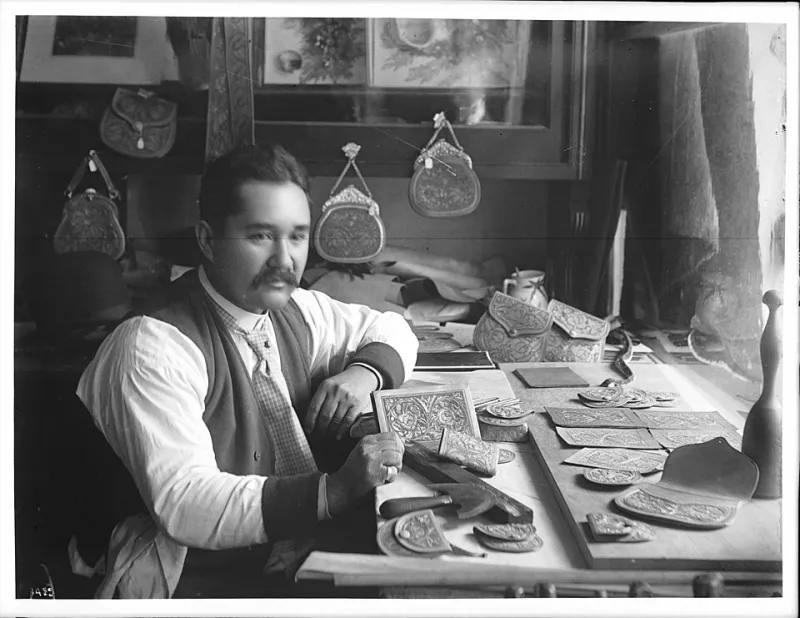
Photo: Unknown authorUnknown author, Public domain, via Wikimedia Commons
A customer walks into your print shop at 9 a.m. with a panic in their eyes. Their grand opening is tomorrow. Their banner vendor bailed. Their brochure file is, in their words, "basically done." You have two options: quote them a price with a discount attached, or quote them a clock. "Approve the proof by noon, and it's in your hands by five."
Guess which one they remember a year later?
The Discount Economy Is a Race to the Bottom
Here's an uncomfortable truth about the print industry: nobody has ever become loyal to a business because of ten percent off. They become loyal because the thing they needed showed up when they needed it. Price is a transaction. Reliability is a relationship.
Think about the last time a local restaurant ran a two-for-one deal. You went, you ate, you forgot. Now think about the plumber who answered the phone at 7 a.m. on a Sunday when your water heater let go. You've got that number memorized. Speed and availability are the currency of trust in local business, and printing is no different.
When a marketing manager at a growing company needs 500 rack brochures before a conference on Thursday, they're not shopping around for the cheapest quote. They're calling the shop they believe will actually deliver. That belief is built one emergency at a time.
What "Same-Day" Actually Requires
Let's be honest about the operational reality, because anyone can slap "same-day service" on a website. Keeping that promise means running the shop like a promise-keeping machine.
Files get triaged, not queued. The moment a rush job lands, someone with real prepress experience looks at it — bleed, resolution, color mode, fonts — within the hour. A same-day job with a broken file isn't same-day; it's tomorrow with an apology attached.
Stock lives on the shelf. You can't print on paper you don't have. Shops that deliver on speed keep deep inventory of the workhorses: 14pt cover stock, standard banner vinyl, the matte and gloss finishes that cover 90% of jobs. When the materials are already in the building, the only variable left is the clock.
The equipment gets maintained before it breaks. A same-day promise dies with a jammed laminator at 2 p.m. Shops that hit deadlines religiously are the ones doing preventive maintenance on Tuesdays, not waiting for a breakdown to force their hand.
Nobody touches the quality dial. Here's the trap: the temptation under time pressure is to skip the proof, eyeball the color, let the trim run slightly loose. That's how you win the day and lose the customer. Fast and wrong is slower than slow and right, because "fast and wrong" generates a reprint, a refund conversation, and a bad review.
The Loyalty Math Nobody Talks About
A loyalty program in the classic sense — punch cards, points, percentage-off emails — costs money on every single transaction and builds, at best, habit. Speed builds something stronger: a story customers tell other customers.
"They saved our event." "They had the signs ready before lunch." These sentences do more marketing than any coupon mailer ever will. And unlike a discount, speed-based loyalty doesn't train your customers to wait for a sale before they order. It trains them to call you first.
There's a compounding effect, too. A business that gets burned by a rush job once will hedge forever afterward — ordering weeks early, keeping buffers, treating print like a risk. A business that gets saved by a rush job once does the opposite. They stop stockpiling. They call you for everything, on every timeline, because the timeline stopped being scary.
Where the Line Is
None of this means saying yes to everything. A same-day promise without boundaries becomes a doormat. The shops that do this well are candid about what's achievable: standard sizes and stocked materials, yes; a 48-hour full vehicle wrap, no. Saying "here's what we can do by Friday" is a promise. Saying "sure, whatever" is a liability.
The honest constraint is part of the value. When a customer knows your yes means yes, your yes becomes worth something.
The Takeaway for Business Owners
If you're buying print, evaluate your vendors the way you'd want customers to evaluate you. Ask not just what they charge, but what happens when your timeline falls apart. The cheapest quote in town is expensive the moment it arrives late.
And if you're selling anything — print, plumbing, pastries — consider that the most powerful loyalty program ever devised isn't a discount at all. It's the phrase every small business owner in America wants to hear: "It's done. Come get it."
We've built our whole operation around that sentence. Turns out, it's the best retention strategy we never had to design.