Campaign Season Is Over. Your Print Strategy Shouldn't Be.
Photo: Unknown authorUnknown author, Public domain, via Wikimedia Commons
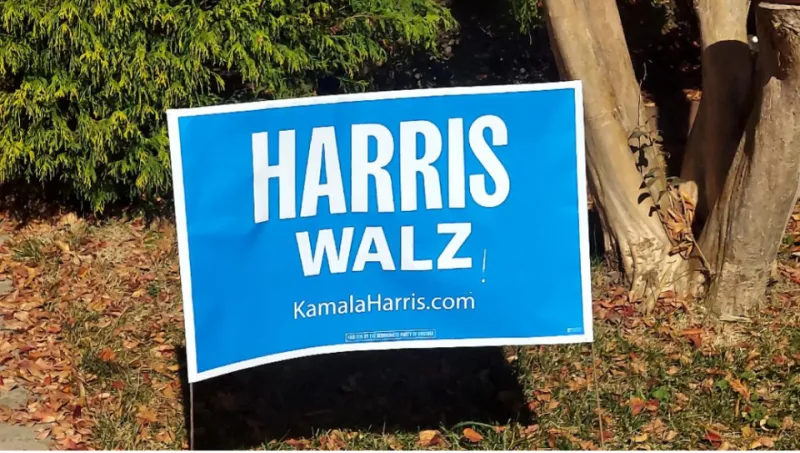
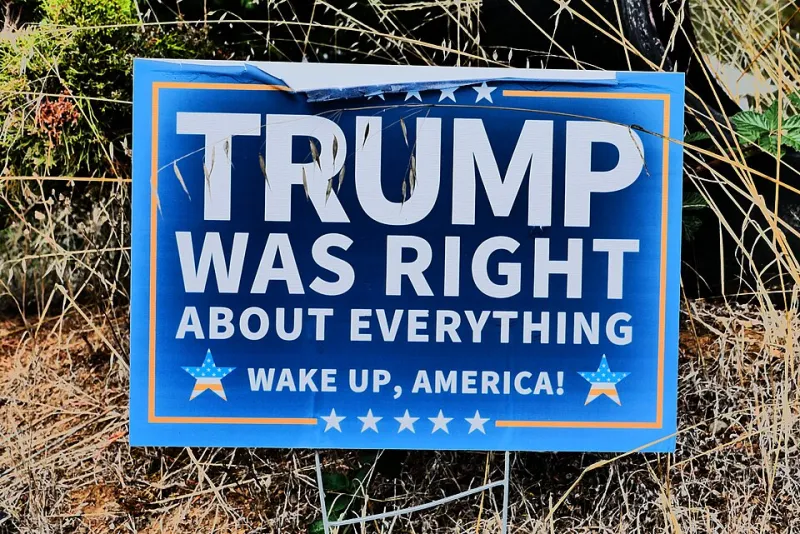
Drive through any American neighborhood in October and you'll see it: a small army of 18-by-24-inch corrugated signs staked into every patch of grass with a name, a race, and a date. Then November passes, the stakes come out, and the whole thing quietly migrates to the curb.
It's easy to write that off as political clutter. But if you run a local business, there's something worth studying in that lifecycle — because political campaigns have mastered three things that most small business marketing completely fumbles: urgency, clarity, and a deadline. The mistake isn't borrowing those lessons. The mistake is borrowing the throwaway design that comes with them.
Why Yard Signs Actually Work
Strip away the politics and a yard sign is just marketing under brutal constraints. It gets maybe three to five seconds of attention from a person walking or driving past. There's no room for a tagline, a paragraph, or a clever aside. It has to land instantly or not at all.
So campaigns do the things we all know we should do but rarely do: one name, one message, one date. Big type. High contrast. No fluff. Compare that to the average small business flyer, which tries to squeeze a logo, three phone numbers, a QR code, a paragraph about the company's history, and a coupon into a space designed for six words.
The lesson isn't "print more signs." It's "respect the reader's three seconds." Whether it's a banner, a postcard, or a window decal, your print should pass the same test a yard sign passes: could a stranger absorb the core message before the light turns green?
The Deadline Is the Message
Here's the part political print does better than almost any commercial print: it comes with a built-in expiration date. Election Day isn't a suggestion. It's why the sign goes up, and it's why people act.
Small businesses constantly run "sales" that never really end, "limited offers" that quietly roll over month after month. Customers figure that out fast, and once they do, your urgency stops meaning anything. A campaign-style print push fixes this by picking a real, hard date — a grand re-opening, a seasonal closeout, a one-weekend event — and building every piece around it. The date goes on the sign, the flyer, the bag stuffer, the sticker. When the date passes, the promotion actually ends.
That discipline does two things. It gives your customers a genuine reason to act now. And it gives you a natural rhythm: campaign, launch, wrap-up, reset. Print marketing stops being a background hum and starts being a series of pushes you can plan for, budget for, and measure.
Steal the Urgency, Skip the Dumpster
So why does most political print end up in the trash while a good restaurant menu or a well-designed business card sticks around for years? Because campaign material is designed to be disposable. Thin stock, no branding beyond a candidate's name, zero reason to keep it once the date passes.
Your version of the campaign push should be built differently:
- Print on stock worth keeping. A heavier card stock flyer or a durable sign can outlive the promotion and keep your brand in circulation after the sale ends.
- Brand the message, not just the moment. A yard sign sells a name for six weeks. Your print should sell your business for six years. Make sure the design points back to you, not just the deadline.
- Give people a reason to hold onto it. A calendar of upcoming events, a punch card, a coupon with a long shelf life — anything that turns a dated promo into a standing reference.
The goal is campaign energy with permanent-fixture durability. Urgency in the message, longevity in the medium.
Build Your Own Campaign Calendar
You don't need an election to run this play. Every local business already has natural campaign dates on the calendar: Small Business Saturday, a spring opening, an anniversary sale, back-to-school, holiday season. Pick two or three a year and treat each one like a candidate treats Election Day.
That means a defined window, a single clear offer, and a small set of print pieces that all say the same thing — a yard sign or banner out front, a counter card inside, a handout that leaves with the customer. One message, repeated across formats, with a date that's real.
Then, when the campaign ends, retire it. Actually retire it. Pull the signage, stop mentioning the offer, and start building toward the next push. That clean ending is what makes the next beginning feel urgent.
The Takeaway
Political campaigns spend enormous money teaching voters one name by one date, using the simplest print on earth. Small businesses can borrow that focus without the landfill ending. Run your promotions like campaigns — tight message, hard deadline, coordinated print — but design every piece like you expect it to still be working next January.
Because the best campaign material isn't the sign that wins in November. It's the print that's still on the wall, in the wallet, or on the counter long after the election is forgotten.