You Already Paid for That Ad Space: Turning Receipts, Invoices, and Box Inserts Into Repeat Business
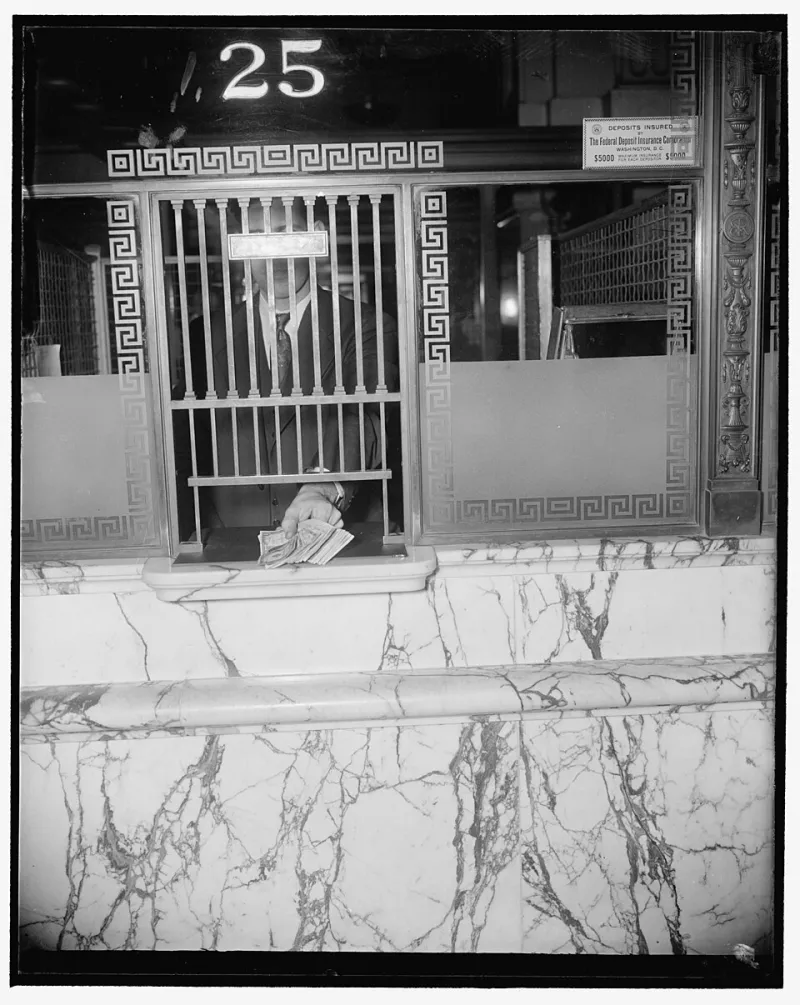
Photo: Harris & Ewing, photographer, Public domain, via Wikimedia Commons
Here's a fun accounting exercise: add up what your business spent last year on paper that customers touched. Receipt rolls. Invoice stock. Appointment cards. Packing inserts. That money's gone — spent, delivered, forgotten.
Now here's the uncomfortable question: how much of it was doing any selling?
For most small businesses, the answer is basically none. And that's a shame, because these surfaces have something almost no other marketing channel can offer: guaranteed attention from someone who already gave you money. They're not leads. They're not cold traffic. They're customers, holding your paper, at the exact moment they've proven they'll buy from you.
The Receipt Back Is Not a Receipt Back
Walk into most diners, hardware stores, or dry cleaners in America and flip the receipt over. Blank. Maybe a faint coupon for a store you've never heard of, courtesy of the credit card processor.
Now consider what a salon in a strip mall outside Columbus did instead. On the back of every receipt: "Book your next color before you leave — ask about our maintenance discount." No clever copy. No QR code circus. Just a nudge, printed on paper she was already buying.
Her rebooking rate went up within a quarter. Was it the receipt alone? Probably not entirely. But the receipt was the only new thing she did, and it cost her roughly nothing beyond the original print run.
The math on thermal receipt printing is almost embarrassing. A roll of two-sided receipt paper costs marginally more than one-sided. Design work for a simple back-of-receipt message is a one-time job — the kind of thing a local print shop can turn around in a day. Compare that to what you'd pay per impression on any digital ad platform, where you're also competing with an algorithm and nine other tabs.
Invoice Stuffers: The Boring Name for a Sneaky-Good Channel
"Invoice stuffer" sounds like something out of a 1987 marketing textbook, and honestly, that's part of its charm. The channel works precisely because it's unfashionable. Nobody's inbox is fighting it. Nobody's ad blocker is screening it.
An auto shop we know includes a simple card with every invoice: a six-month reminder for tire rotation on one side, a referral offer on the other. Nothing fancy. But the shop's service writer says customers mention the card constantly — "the one in the folder" — because it shows up at exactly the right time, in the same envelope as a bill they were already reading.
That's the whole trick with these surfaces: timing and context. A Facebook ad interrupts someone. An invoice insert arrives alongside information the customer actually wants. You're not competing for attention; you're riding on it.
A few formats worth testing:
- The next-visit nudge — a dated reminder tied to whatever they just bought (oil change, haircut, HVAC checkup)
- The referral card — a tear-off or detachable piece with a spot for the customer's name, so the referral feels personal
- The upsell preview — "Customers who booked X also added Y" — printed plainly, without the algorithm-speak
Delivery Boxes: The Insert That Rides Home
If you ship or deliver anything — food, flowers, retail orders — the inside of that box is the most premium ad space you own. The customer opened it. They're looking at it. Right now.
Pizzerias figured this out years ago with box toppers, and the good ones treat them like rotating menu real estate: lunch specials on weekdays, family deals on weekends, a magnet-sized coupon for the slow Tuesday shift. A box topper costs pennies in quantity. A Tuesday that goes from slow to steady pays for a year of them.
But you don't need a pizza box to play. A florist can tuck a care-card into every arrangement — watering instructions on the front, "reorder for the anniversary" on the back. An e-commerce side hustle can slide in a thank-you card with a punch-card loyalty offer. The insert isn't an ad. It's part of the unboxing, and unboxings get photographed.
Why These Beats Work Better Than They Should
There's a credibility thing happening here that's worth naming. Print that arrives with the product or service — attached to the receipt, inside the box, stapled to the invoice — inherits the trust of the transaction. It's not a stranger shouting. It's the business you just bought from, saying one more thing.
Compare that to retargeting ads, which follow people around the internet like a guy who won't leave the party. The receipt back never follows anyone. It just sits there, in a wallet or a junk drawer, waiting for the moment it's relevant. That junk-drawer dwell time is real. People find receipts months later. Your offer comes back from the dead, free of charge.
Getting It Done Without Overthinking It
If you want to audit your own forgotten surfaces, here's the quick version:
- List everything paper that leaves your business. Receipts, invoices, bags, boxes, appointment cards, packing slips.
- Ask what each one says now. If the answer is "nothing," you've found your opportunity.
- Pick one message per surface. One. A receipt back with three offers is a receipt back with zero offers.
- Print in small batches first. Test the message, see what customers respond to, then scale the winner. (We've made this argument before — order what you can learn from, not what fills a pallet.)
- Give it a season. Print marketing compounds quietly. Judge it after a quarter, not a week.
The best part of this whole strategy is that you've already absorbed the hard costs — the transaction, the delivery, the appointment. The paper was always going to exist. The only decision is whether the back of it works for you or stares at the ceiling.
Bring us your most boring piece of paper and we'll show you what it could be saying. That's kind of our favorite kind of homework.